← Back to all films
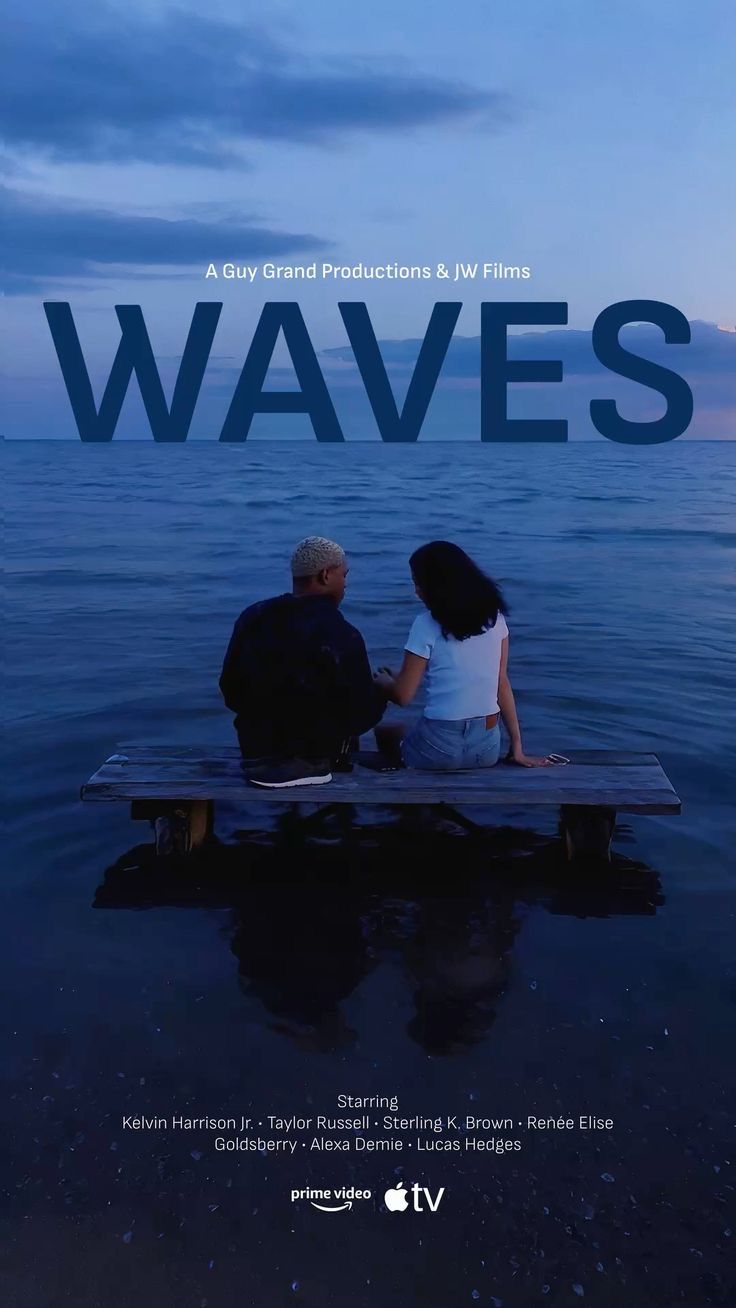
Waves poster
Film Notes

Waves

2019 Drama Directed by Trey Edward Shults

Waves is a film about intensity — emotional, physical, and psychological — and the way that intensity can both define and destroy a person. It moves through love, pressure, identity, family, and grief with a kind of overwhelming force, using colour, music, and movement to pull the viewer directly into its emotional world.

The film is divided into two distinct emotional movements. The first half is fast, chaotic, and suffocating, following Tyler as he struggles under expectations, masculinity, control, and internal pressure. Everything feels heightened — the music is loud, the camera is close, and every moment carries a sense of urgency that slowly becomes unbearable.

The second half shifts completely. It becomes softer, quieter, and more reflective, focusing on Emily and the aftermath of everything that has happened. Where the first half is about collapse, the second half is about healing — or at least the possibility of it.

What makes Waves so powerful is this contrast. It shows how quickly life can break apart, but also how slowly it can begin to come back together. It is not just a story about tragedy, but about forgiveness, grief, and the fragile process of moving forward.

What the film is about

Waves follows a suburban family in South Florida as their lives are shaped by pressure, love, loss, and recovery. The film begins with Tyler, a high school wrestler dealing with expectations from his father, academic pressure, injury, and a growing sense of internal instability.

As Tyler’s life becomes increasingly overwhelming, his decisions begin to spiral, leading to consequences that dramatically alter the course of his family’s life. The film does not isolate this moment as a singular tragedy, but instead shows how multiple pressures build over time until they reach a breaking point.

After this turning point, the narrative shifts focus to his younger sister Emily, whose experience introduces a different emotional tone. Her story explores grief, forgiveness, and the possibility of emotional repair in the aftermath of trauma.

The film ultimately becomes a reflection on how families absorb pain, how individuals cope with loss, and how healing is never immediate, but gradual and uncertain.

Why it belongs here

Waves belongs here because it captures emotional intensity in a way that feels immersive and honest. It aligns with themes of identity, pressure, masculinity, vulnerability, grief, forgiveness, and transformation.

Like Euphoria, it explores youth and emotional chaos, but grounds that chaos in family dynamics and consequence. Like The Florida Project, it examines how environment shapes experience, but does so through a more internal, psychological lens.

It also fits your archive because of its visual and emotional language. Colour, music, and movement are used to express internal states, making the film feel as much like an experience as a narrative.

Within your collection, it represents both collapse and recovery — showing that emotional devastation and emotional healing can exist within the same story.

What it evokes

The emotional impact of Waves is overwhelming and deeply affecting. It evokes anxiety, pressure, sadness, empathy, and ultimately a quiet sense of hope.

The first half creates a sense of suffocation — the feeling of being trapped inside expectations and unable to escape. The second half introduces space, allowing for reflection and emotional release.

The film also evokes empathy in a powerful way. It does not simplify its characters, but instead allows them to be flawed, emotional, and human.

What lingers most is the contrast between destruction and healing — the realization that even after something breaks, there is still the possibility of rebuilding.

Intensity Pressure Grief Empathy Healing

How critics responded

Waves received strong critical praise for its direction, performances, and visual style. Critics highlighted its emotional intensity and its use of music and cinematography to create an immersive experience.

The film was often noted for its ambitious structure, particularly its shift in tone and perspective between its two halves.

The film was described as emotionally overwhelming and visually striking, capturing both the chaos and the quiet of human experience.