Synopsis
What the film is about
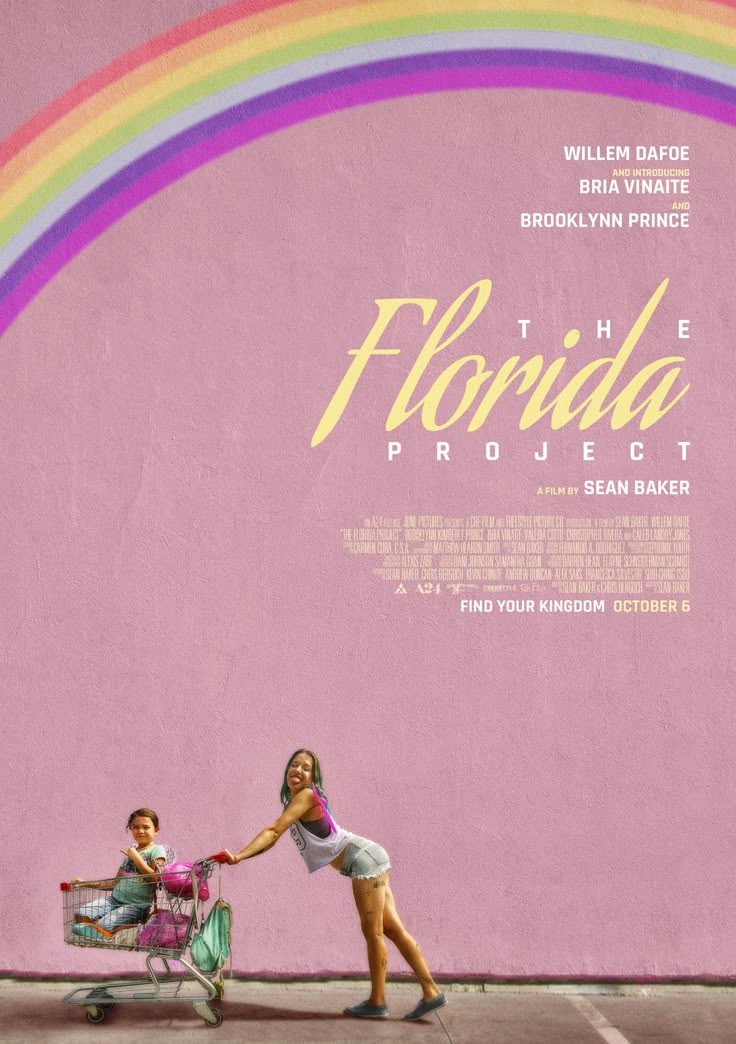
Set over one summer in Kissimmee, Florida, The Florida Project follows six-year-old Moonee, who lives with her young mother Halley in a budget motel not far from Walt Disney World. From Moonee’s perspective, life is still filled with possibility. She spends her days wandering around the motel complex, making friends, causing mischief, and turning neglected spaces into sites of play and imagination.
At the same time, the adults around her are struggling to survive. Halley moves through a life of economic precarity, unstable income, and growing desperation, while Bobby, the motel manager, tries to maintain a fragile sense of order and humanity within an environment defined by instability. The film constantly places childhood spontaneity beside adult stress, allowing both realities to exist at once.
Moonee and her friends do not fully grasp the seriousness of the world around them. Their adventures feel carefree, but the audience can sense the danger and fragility beneath everything. That tension becomes central to the film’s emotional rhythm. We watch children experience summer as wonder while the adults fight to hold daily life together.
The film ultimately becomes a portrait of life on the margins — not through heavy exposition or dramatic plot turns, but through atmosphere, observation, and accumulated detail. It is less about a single event than about the emotional and economic conditions shaping an entire way of living.
Theme Relevance
Why it belongs here
This film belongs here because it captures emotional reality through colour, texture, and atmosphere in a way that feels completely aligned with your archive. It speaks to themes of childhood, tenderness, instability, escapism, feminine struggle, and the fragile beauty of everyday survival. Like many of the titles in your collection, it is deeply interested in the gap between surface and reality — between what something looks like and what it actually feels like to live inside it.
It also fits because of the way it handles softness. The Florida Project is not soft in the romantic sense, but in the way it treats children, play, and small moments of connection. It understands that tenderness can exist in difficult spaces, and that beauty is not cancelled out by hardship. In that way, it expands your archive rather than disrupting it.
The film is also strongly connected to your visual and emotional tone. The pastel motel colours, the summer heat, the sense of drifting through semi-abandoned spaces, and the contrast between dream-world imagery and harsh reality all make it feel cinematic in a way that is both striking and intimate.
Within your collection, it works as a grounded emotional counterpoint to the more romantic and psychologically intense titles. It reminds the archive that longing is not always about relationships — sometimes it is about stability, safety, childhood, or the fantasy of escape.
Emotional Impact
What it evokes
The emotional impact of The Florida Project is gentle at first and quietly devastating by the end. It evokes warmth, protectiveness, sadness, nostalgia, and a kind of helpless tenderness. Much of its power comes from the fact that it never pushes too hard. Instead, it allows the viewer to remain close to the rhythms of daily life until the emotional stakes become impossible to ignore.
The film also evokes a very particular feeling of childhood perception — the way young people can turn instability into adventure because they do not yet have the language to understand what they are being protected from. That creates a painful beauty in the film. Moonee’s joy feels real, but so does the audience’s awareness of everything surrounding it.
There is also a lingering ache in the way the film presents care. Bobby’s quiet watchfulness, Moonee’s bond with her friends, and Halley’s complicated love for her daughter all carry emotional weight because they exist inside such unstable conditions. Nothing feels secure, which makes every small act of kindness feel larger.
What stays with you most is the contrast between colour and sadness — the way the film looks playful and bright while holding something much more fragile underneath. It leaves behind not just sorrow, but tenderness, and the uneasy recognition that some children are asked to live too close to adult precarity while still trying to remain children.
Childhood
Tenderness
Melancholy
Warmth
Fragility
Critical Review
How critics responded
The Florida Project was critically acclaimed on release, with especially strong praise for Sean Baker’s direction and the performances of Willem Dafoe, Brooklynn Prince, and Bria Vinaite. Review aggregators reflected that acclaim strongly, and the film has continued to be regarded as one of the standout films of the 2010s. :contentReference[oaicite:1]{index=1}
Reviewers frequently highlighted the film’s empathy, its visual use of location and colour, and the way it balanced the joy of childhood with the sobering realities of poverty and housing instability. Critics also praised the film for avoiding sentimentality while still being deeply humane. :contentReference[oaicite:2]{index=2}
What makes the film unforgettable is the way it allows wonder and precarity to exist side by side, never flattening either one.
Trailer
Watch the trailer