Synopsis
What the film is about
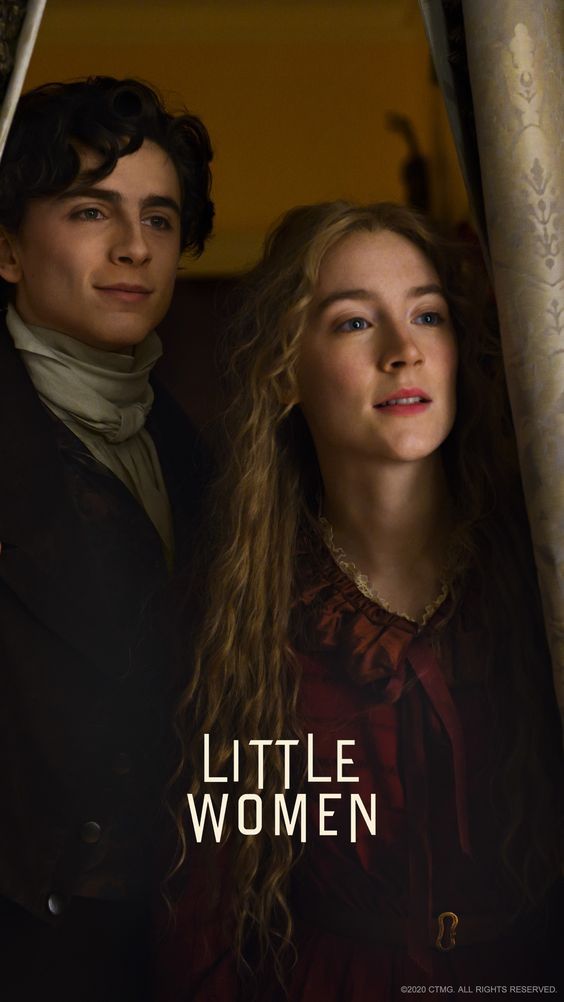
Set in the years surrounding the American Civil War, Little Women follows the four March sisters — Jo, Meg, Amy, and Beth — as they grow from girlhood into adulthood, each negotiating love, family, identity, and the shape of her future. Though they share a home, a history, and a deep emotional bond, each sister moves toward life differently, guided by her own desires, fears, and sense of possibility.
The film moves between timelines, weaving together the warmth of the sisters’ earlier years with the more complicated emotional realities of adulthood. Jo pursues writing with fierce independence, Meg navigates love and domestic life, Amy confronts ambition and practicality, and Beth carries a quiet emotional gravity that shapes the entire family. Their lives unfold not as one shared coming-of-age story, but as four different versions of becoming.
Rather than centering only romance, the film gives equal weight to artistic ambition, sisterhood, economic reality, grief, and memory. It explores how love and loss live inside a family over time, and how the stories people tell about themselves are often shaped by both longing and compromise.
By the end, Little Women becomes not just a portrait of a family, but a meditation on authorship — of books, of identity, and of one’s own life. It is about how women make meaning for themselves in a world that often tries to decide that meaning in advance.
Theme Relevance
Why it belongs here
This film belongs here because it captures the emotional complexity of womanhood with elegance and depth. It aligns with themes of feminine interiority, creativity, longing, family intimacy, self-definition, and the quiet conflict between affection and autonomy. It is deeply romantic in places, but its emotional center is broader than romance alone. It is just as interested in ambition, authorship, memory, and the emotional architecture of sisterhood.
It also fits beautifully into a collection shaped by softness and reflection because it treats domestic life as cinematic without flattening it into nostalgia. The warmth of the March home is real, but so are the financial limitations, emotional frustrations, and compromises that shape each sister’s future. That balance makes the film feel emotionally rich rather than idealized.
Jo March, especially, makes the film resonate in a very modern way. Her desire to write, to remain intellectually and creatively free, and to resist a life chosen for her gives the story its pulse. The film understands how deeply love and independence can coexist in tension, and how painful it can be to want both intimacy and self-possession.
It belongs in this space because it feels literary, tender, and emotionally intelligent — a story concerned with how women become themselves in relation to family, art, money, love, and time.
Emotional Impact
What it evokes
The emotional effect of Little Women is full and lingering. It evokes warmth, tenderness, nostalgia, grief, ambition, and a kind of soft ache tied to memory and change. The film feels alive with emotional movement: moments of closeness, bursts of laughter, flashes of frustration, and the quiet pain of realizing that love does not prevent time from carrying everyone forward.
It also evokes something very specific about growing up within a family — the way home can feel both comforting and impossible to keep unchanged. The film understands that becoming an adult is not only about discovering who you are, but about witnessing how the people you love become themselves too, sometimes in ways you did not expect.
There is particular emotional force in the way the film treats creative longing. Jo’s desire to make something of her own, to write herself into permanence, gives the film an ache beyond romance. It is the ache of wanting your inner life to matter in the world, of wanting not just to be loved, but to be fully expressed.
What lingers most is the combination of warmth and loss. Little Women leaves behind the feeling of candlelit rooms, snow, paper, voices overlapping, and the knowledge that the most beloved parts of life are often the most impossible to preserve exactly as they were.
Tenderness
Nostalgia
Longing
Grief
Becoming
Critical Review
How critics responded
Little Women was widely praised for Greta Gerwig’s direction and screenplay, the ensemble cast, and the film’s emotionally intelligent restructuring of the novel’s timeline. Critics responded strongly to the way it made a classic text feel immediate, alive, and contemporary without losing its period atmosphere.
Saoirse Ronan’s performance as Jo was especially celebrated, as were Florence Pugh, Timothée Chalamet, Laura Dern, Emma Watson, and Eliza Scanlen. Reviewers often noted the film’s warmth, wit, and visual richness, but also its sharp attention to women’s economic realities, creative ambition, and the emotional negotiations built into love and family life.
Critics often described the film as both comforting and incisive — a beautiful period drama that never loses sight of the emotional and material realities shaping women’s lives.
Trailer
Watch the trailer