Synopsis
What the film is about
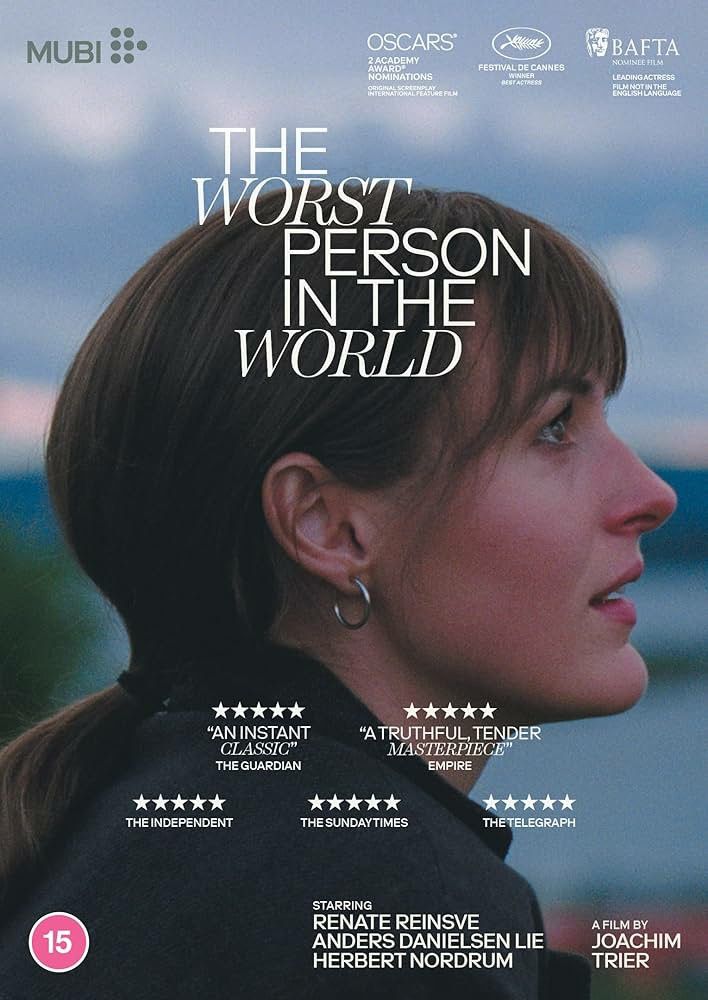
Julie is a young woman navigating her twenties in Oslo, moving between studies, careers, and relationships as she searches for a sense of direction. The film is structured in chapters, each capturing a different phase of her life and emotional development.
She enters a relationship with Aksel, an older comic artist who represents stability and certainty, but also a life that may not fully align with her evolving sense of self. As time passes, Julie begins to question whether she is living authentically or simply following a path that feels expected.
A chance encounter introduces a new relationship that feels more spontaneous and emotionally aligned, but also more uncertain. The film explores how these relationships shape Julie’s understanding of herself, not as clear choices between right and wrong, but as experiences that reveal different parts of her identity.
Rather than building toward a single resolution, the film reflects the unpredictability of life itself — how meaning is often found not in certainty, but in the process of moving through uncertainty.
Theme Relevance
Why it belongs here
This film belongs here because it captures the emotional complexity of identity in transition. It aligns with themes of self-discovery, time, indecision, longing, and the tension between different possible versions of a life.
Like *Frances Ha* and *Columbus*, it explores the uncertainty of adulthood without framing it as failure. Instead, it presents it as a natural and necessary part of becoming.
It also fits your collection because of its balance — it is reflective without being heavy, emotionally honest without being overly dramatic. It allows space for contradiction, showing that people can want multiple, conflicting things at once.
At its core, the film is about time — how it moves, how it shapes identity, and how moments that feel fleeting can define who we become.
Emotional Impact
What it evokes
The emotional impact of The Worst Person in the World is both immediate and reflective. It evokes recognition, nostalgia, uncertainty, and a quiet sense of urgency about time passing.
There is a lightness to the film, but also an underlying melancholy. It captures the feeling of being in between — not fully grounded in one identity, but aware that time is moving forward regardless.
What lingers most is the sense of possibility mixed with limitation — the understanding that every choice shapes a life, and that not choosing is also a kind of choice.
Uncertainty
Reflection
Nostalgia
Longing
Becoming
Critical Review
How critics responded
The film was widely praised for its screenplay, direction, and Renate Reinsve’s performance, which earned her the Best Actress award at Cannes.
Critics highlighted its structure, its emotional honesty, and its ability to capture the experience of modern adulthood with nuance and authenticity.
Critics often described the film as a defining portrait of contemporary life, noting its ability to capture both the freedom and anxiety of modern identity.
Trailer
Watch the trailer