← Back to all films
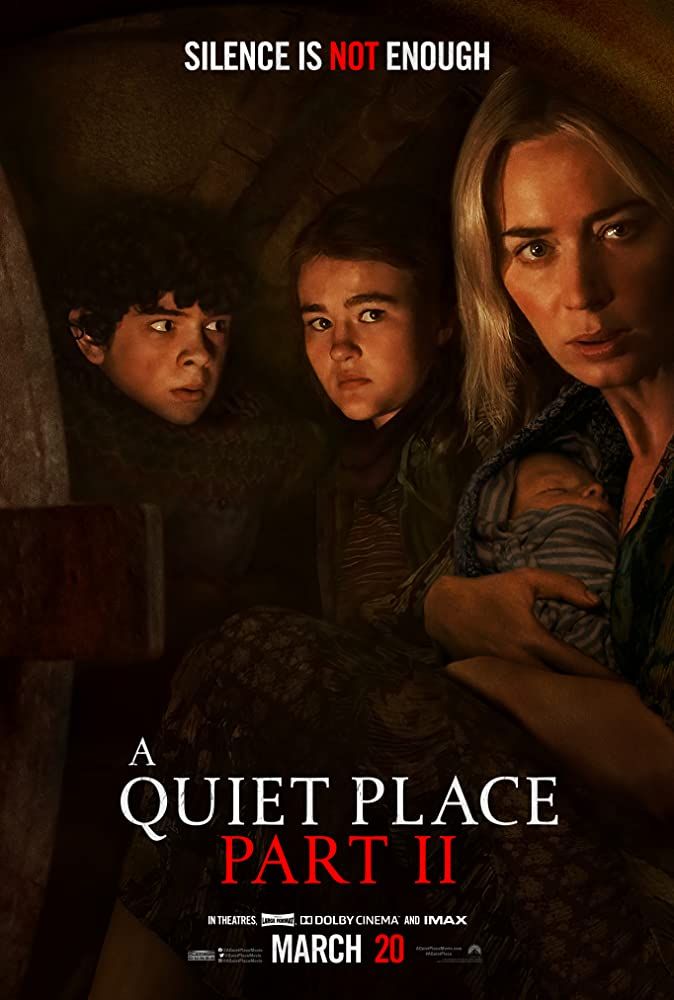
A Quiet Place poster
Film Notes

A Quiet Place

2018 Horror / Drama / Thriller Directed by John Krasinski

A Quiet Place is a film about silence — not just as a survival mechanism, but as an emotional language. In a world where making a sound can mean death, communication becomes stripped down to its most essential forms: touch, eye contact, breath, presence. The result is a story that feels intensely intimate despite its high-stakes premise.

At its core, the film is about family — about protection, sacrifice, and the quiet ways people show love when words are no longer an option. The absence of sound amplifies everything else: fear becomes sharper, tension becomes physical, and even the smallest moments of connection carry enormous weight.

What makes the film so effective is its restraint. It does not rely solely on spectacle or noise, but instead builds tension through stillness, anticipation, and the constant awareness that something could happen at any moment. It transforms silence into something fragile, dangerous, and deeply emotional.

What the film is about

Set in a post-apocalyptic world, A Quiet Place follows the Abbott family as they navigate life while being hunted by creatures that rely entirely on sound. To survive, they must live in near-complete silence, communicating through sign language and carefully controlling every movement.

The family’s daily life is built around precaution — walking barefoot on sand paths, avoiding anything that could make noise, and constantly remaining aware of their surroundings. Every action carries risk, turning ordinary tasks into moments of tension.

Beneath the external threat is a deeply emotional story about grief, guilt, and the need to protect one another. The parents struggle to keep their children safe while also dealing with the emotional weight of loss and responsibility.

As the situation intensifies, the film reveals how survival is not just about avoiding danger, but about maintaining connection in a world where communication itself has become limited.

Why it belongs here

This film belongs here because it explores emotion through restraint. It aligns with themes of silence, protection, family, fear, and the unspoken aspects of love.

Like many titles in your collection, it uses minimal dialogue to create emotional depth. The absence of speech forces attention onto gesture, expression, and presence — making every interaction feel intentional.

It also reflects the idea that vulnerability and strength can exist at the same time. The characters are constantly at risk, yet their connection to one another remains the thing that gives them purpose.

Within your archive, it adds tension without breaking the aesthetic. It shows that even within fear and survival, there is space for intimacy and emotional meaning.

What it evokes

The emotional impact of A Quiet Place is immediate and physical. It evokes tension, fear, anxiety, and a deep sense of protectiveness.

At the same time, it carries a quiet emotional core. Moments of connection — a glance, a gesture, a shared understanding — feel amplified because of the silence surrounding them.

The film creates a constant awareness of fragility — how quickly safety can disappear, and how important it is to hold onto the people around you.

Tension Fear Love Protection Silence

How critics responded

A Quiet Place was widely praised for its concept, direction, and performances. Critics highlighted its innovative use of sound (and silence) and its ability to create suspense through minimal dialogue.

The film was also noted for balancing horror with emotional storytelling, making it both tense and meaningful.

Critics often described the film as both suspenseful and emotionally grounded, noting how effectively it uses silence to heighten tension and deepen connection.